Z5BL-3ST
Chain-fed five-row boring machine with 110 spindles. Three stoppers drill up to three panels at once and the rear stacker stacks them automatically, so one operator runs the machine at 13–16 panels/min.
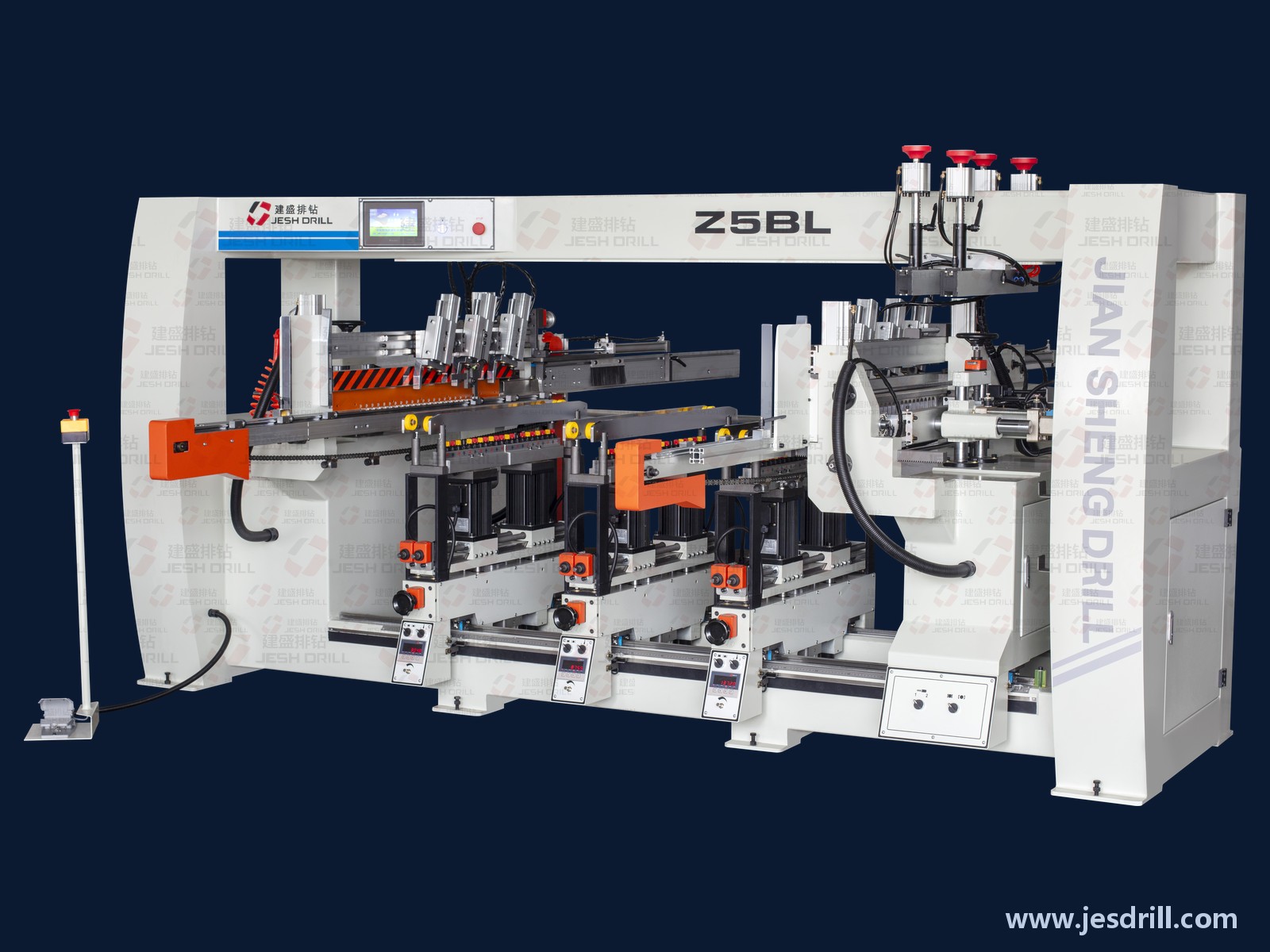
Key features
Why one machine needs just one operator
High-speed magazine loader
Magazine capacity up to 300 mm keeps panels feeding continuously, so a change of batch needs no waiting.
Triple stoppers
Three stoppers locate up to three panels at once: 50–630 mm single, 50–220 mm double, 50–150 mm triple.
Single operator
Loading, drilling and stacking form one line, so one operator runs the machine.
Rear stacker
Drilled panels drop onto the stacker behind the machine, 150–900 mm above the floor and up to 1200 mm wide — no manual offloading.
Five drill rows
110 spindles in five rows: three vertical rows with 66, plus one 22-spindle horizontal row on each side, so face and edge holes run in one pass.
Adjustable rows
Vertical rows tilt between 0° and 90° on linear guides, so a new panel type needs no extra row set-up.
Main structure
Loading, drilling and unloading in one line

Note: the English labels on the drawing come from the original product document; the diagram is not to scale.
Drill-row layout
66 vertical spindles plus 44 horizontal spindles = 110

Three vertical rows carry two 11-spindle blocks each (66 spindles); the two horizontal rows carry 22 spindles each (44). Total 110, as listed in the specification table.
Stoppers and panel width
One, two or three panels per cycle

1 stopper · single panel
Single panel 50–630 mm wide, drilled one at a time.

2 stoppers · two panels
Two panels 50–220 mm wide each, drilled together.

3 stoppers · three panels
Three panels 50–150 mm wide each, drilled together.
Note: widths follow the stopper position in use; the illustration comes from the product document.
Spindle clearances
Minimum hole distance and row clearances

Hole distance
Minimum 32 mm on X and 32 mm on Y.

Vertical rows
Minimum 135 mm between vertical rows.

Horizontal vs vertical
80 mm minimum, 190 mm maximum, 150 mm in the vertical direction.
Note: figures are read from the original drawings in the product document; the actual hole pattern is confirmed with our process engineer and the configuration sheet.
Configurations
What sits on the machine and what it does
Triple stopper system
Three stoppers locate one to three panels per cycle; the panel width follows the stopper position in use.

Magazine loader
Capacity up to 300 mm, feeding panels into the drilling station continuously.

Vertical presser
Holds the panel down vertically and swings to the right when not needed.

Vertical drill rows
Three vertical rows adjustable between 0° and 90°; two blocks per row, 11 spindles per block.

Drag chain trunking
Cables run inside the drag chain, keeping the wiring tidy and protected.

Control
PLC with touchscreen; program call-up and parameter changes in one place.

Digital display
Position readouts are shown directly, so no separate measuring for set-up.

Horizontal drill rows
One 22-spindle horizontal row on each side for the side holes.

Vertical row travel
Linear guide rails move the vertical rows to position.

Block and spindles
Each block carries 11 spindles, fitted with drill bits according to the hole pattern.
Note: photos and close-ups come from this model's product document, some are detail shots taken in the workshop.
On-site photos
Close-ups of the drill rows, pressers and feeding section, shot at the exhibition
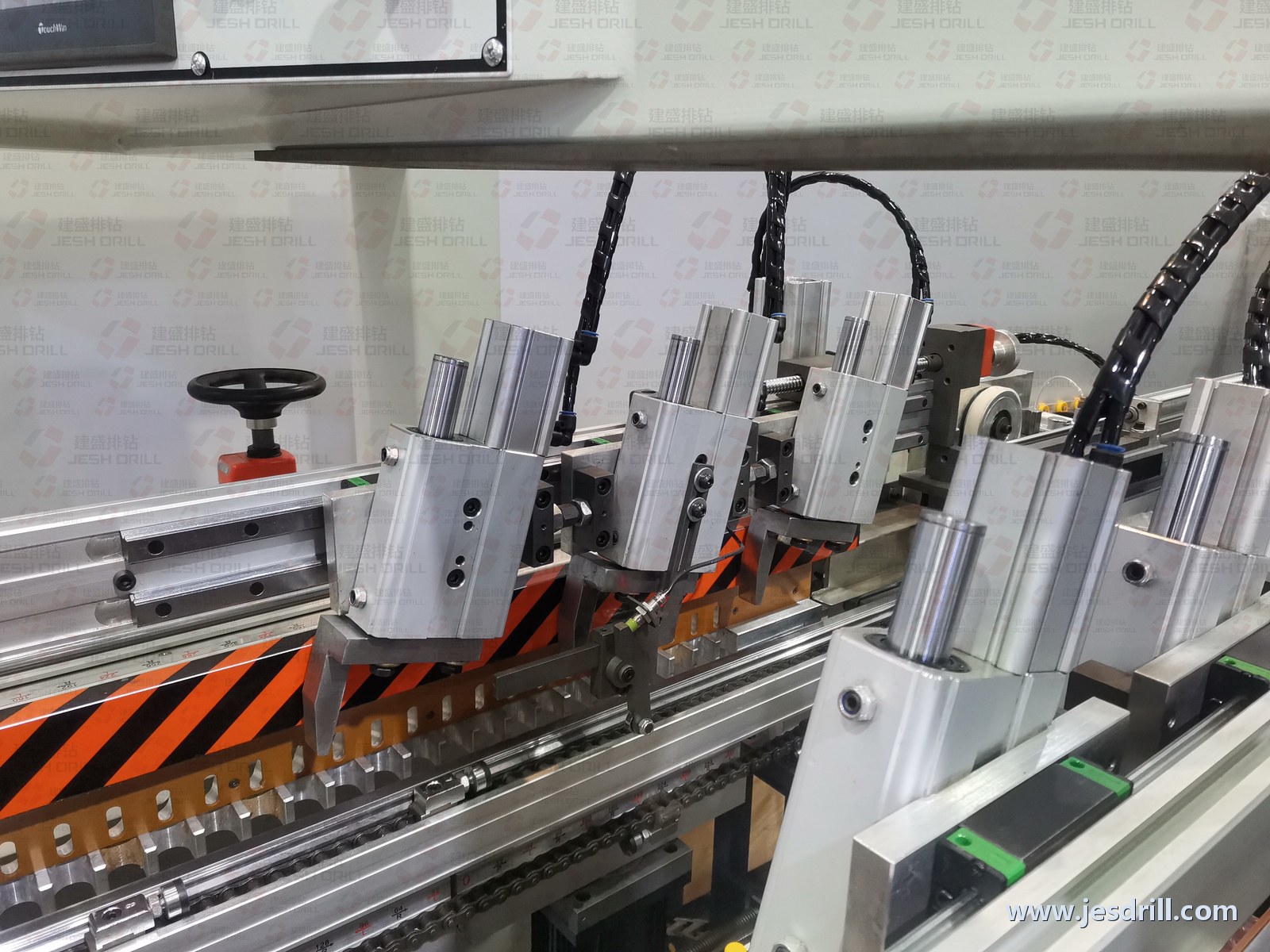
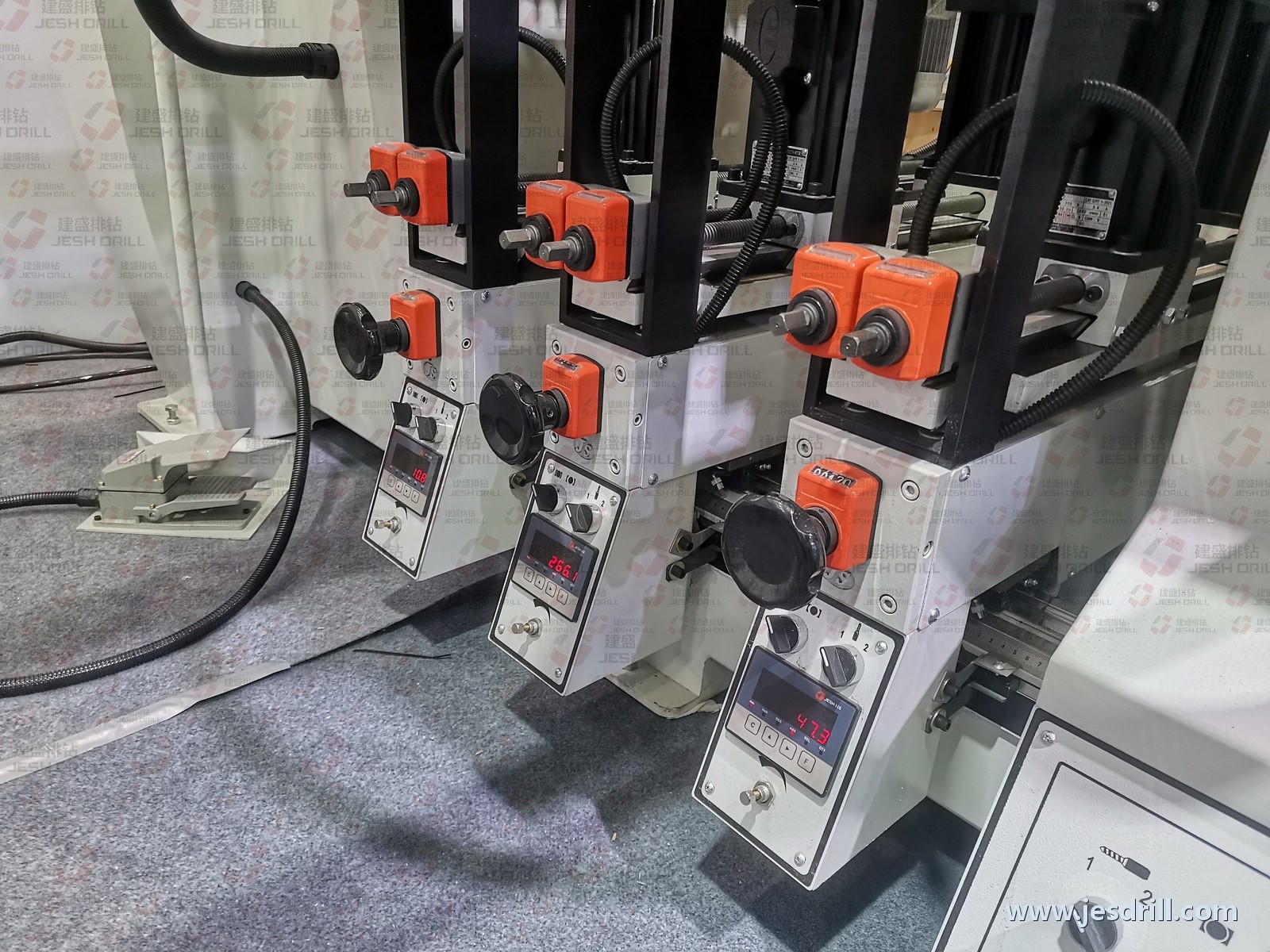
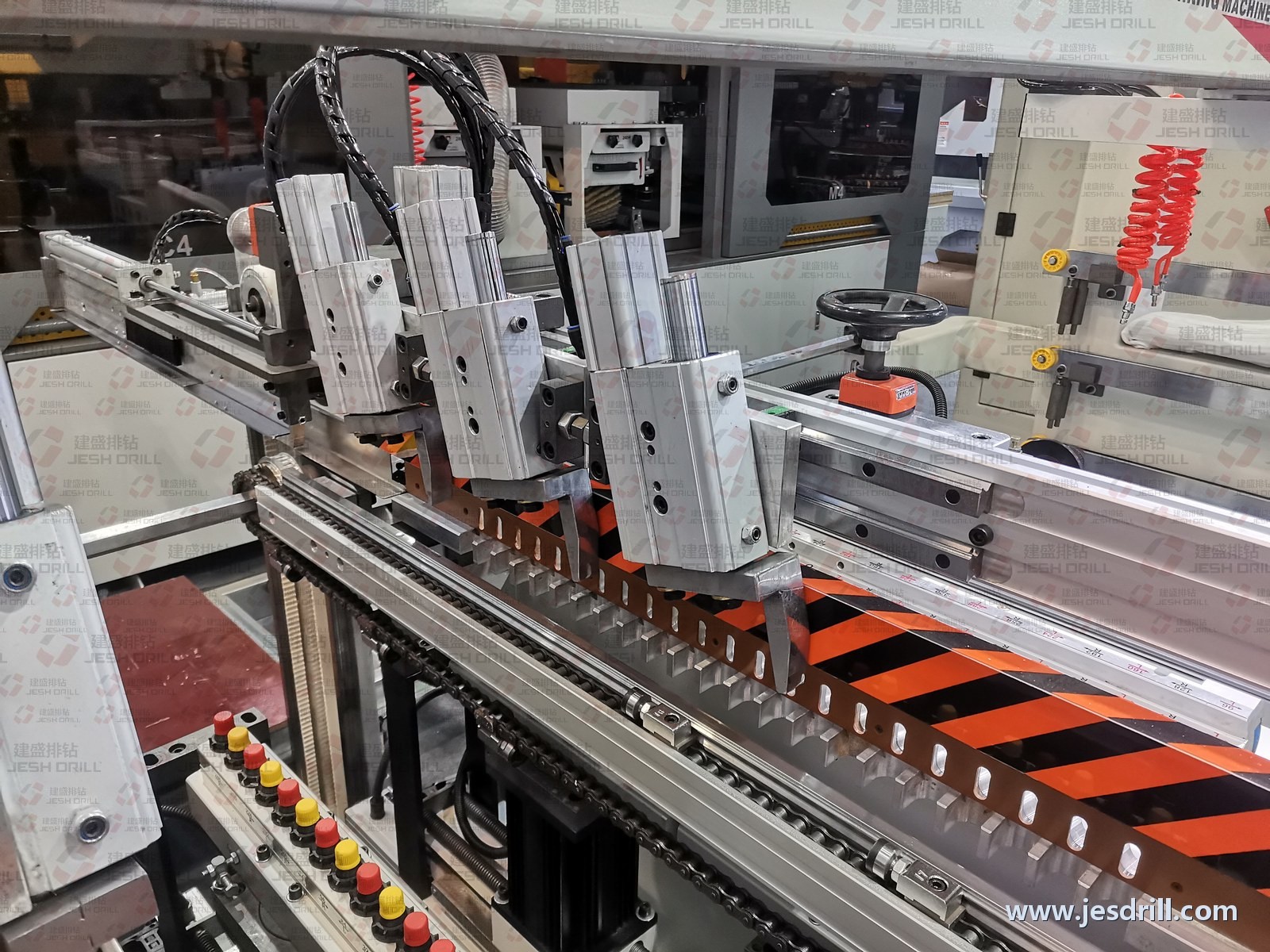
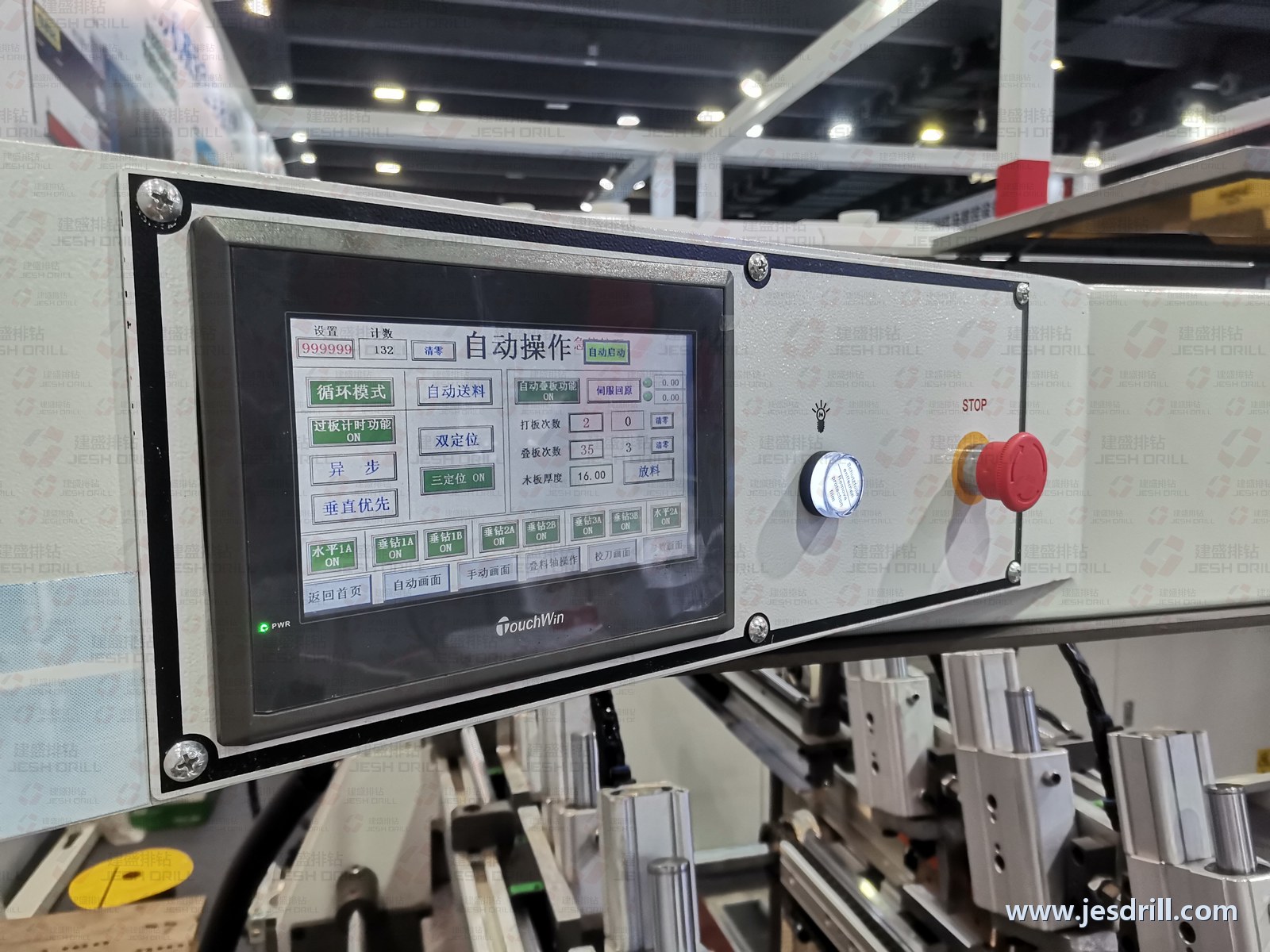
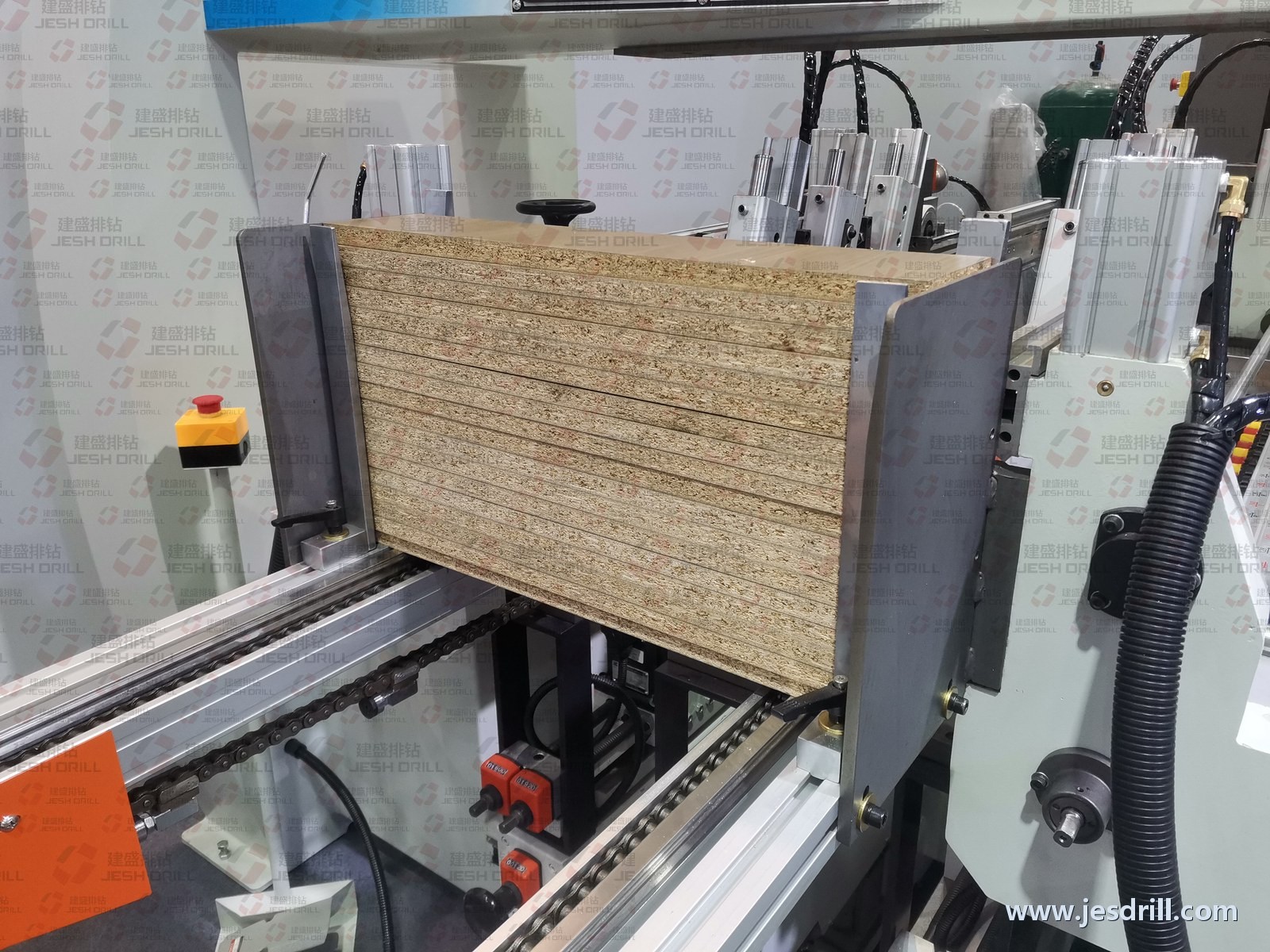
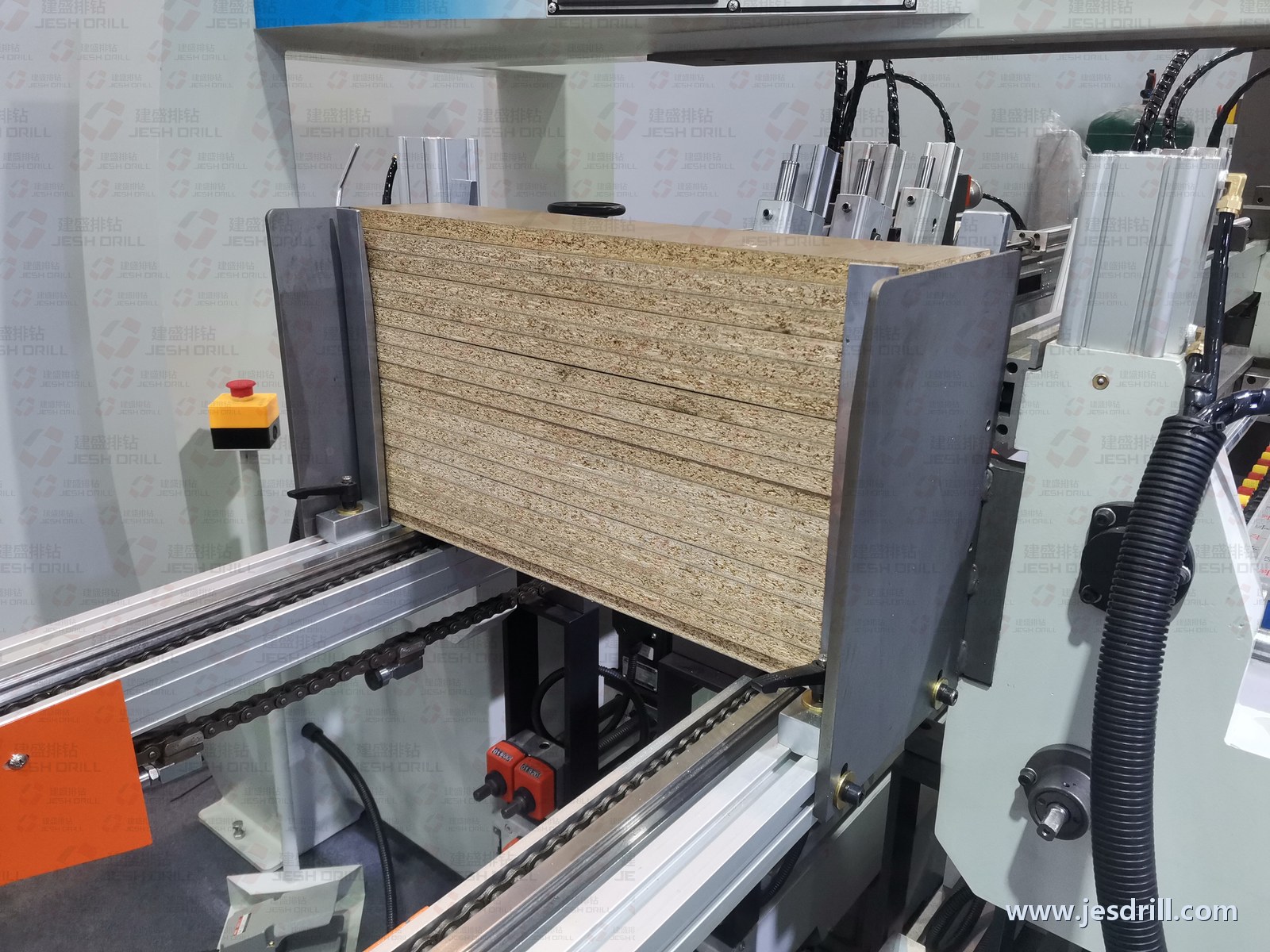
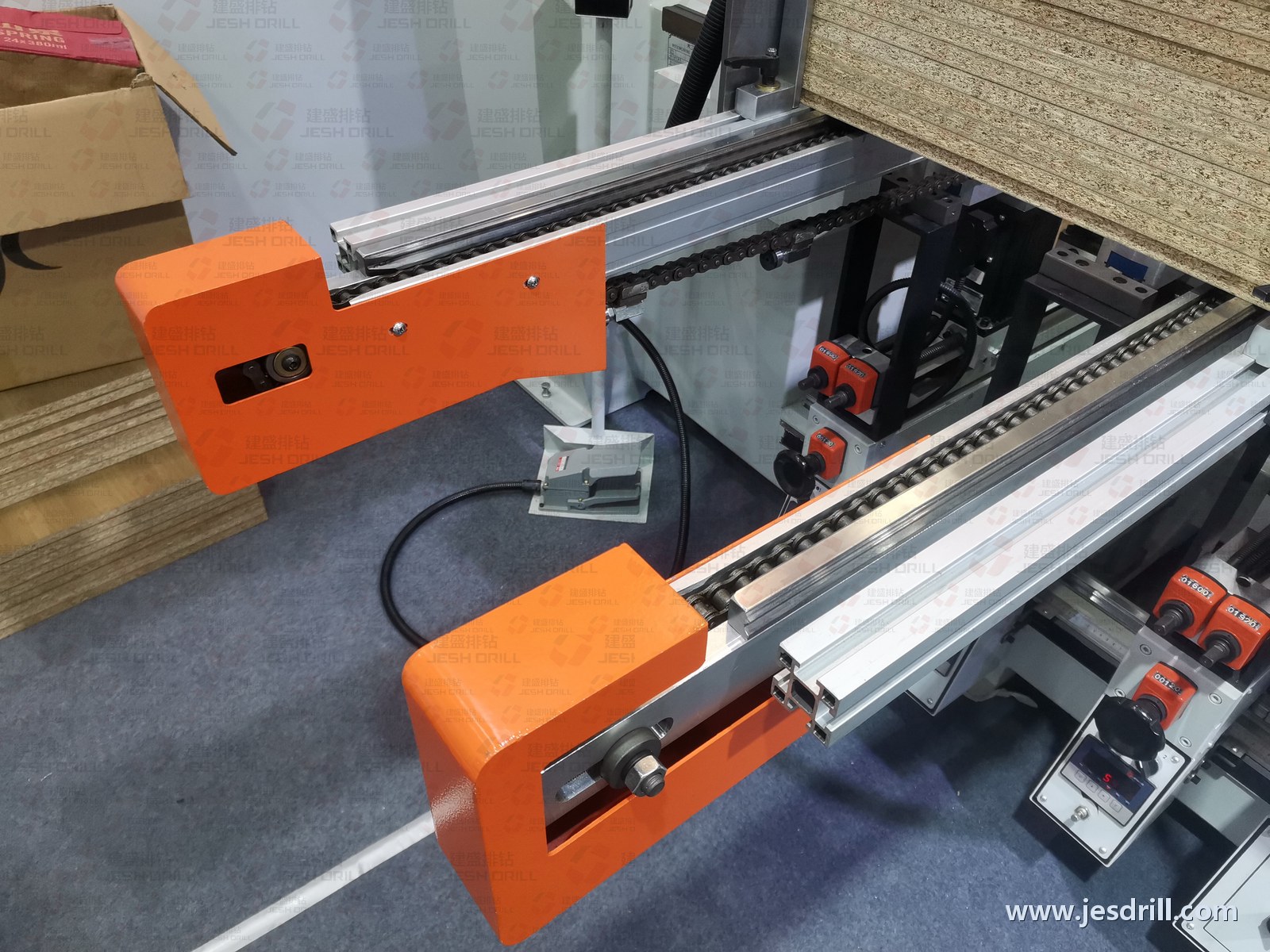
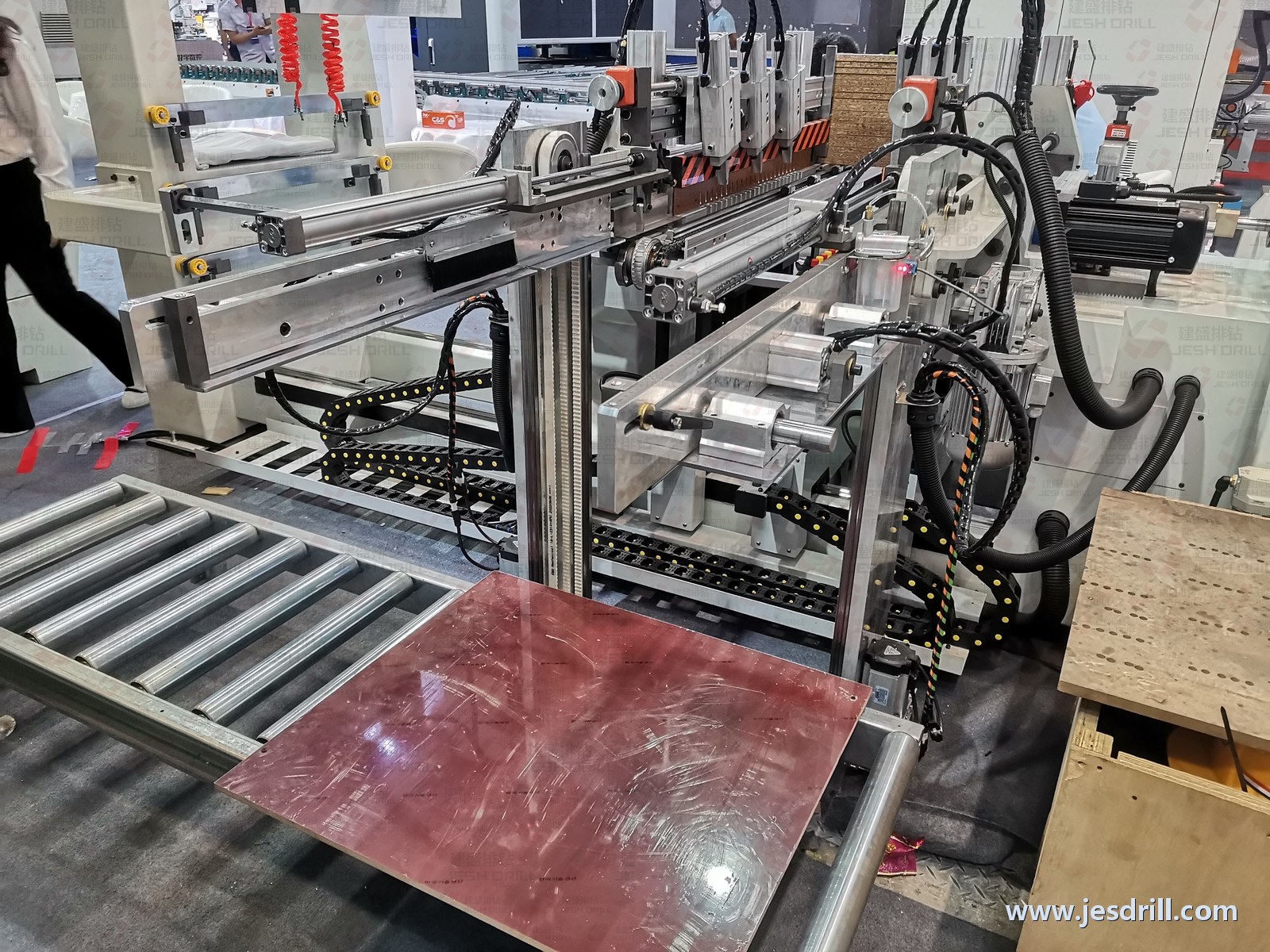
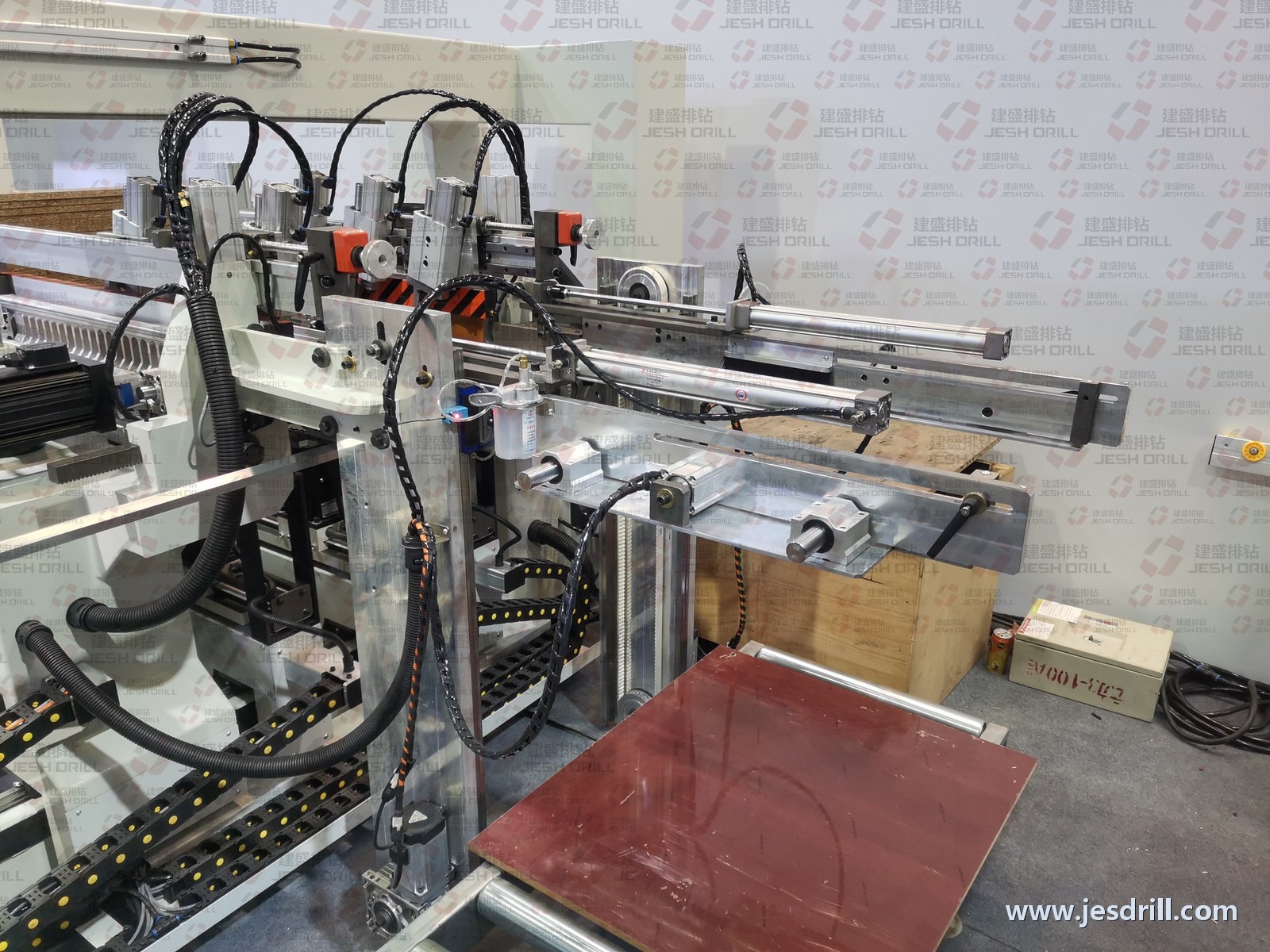
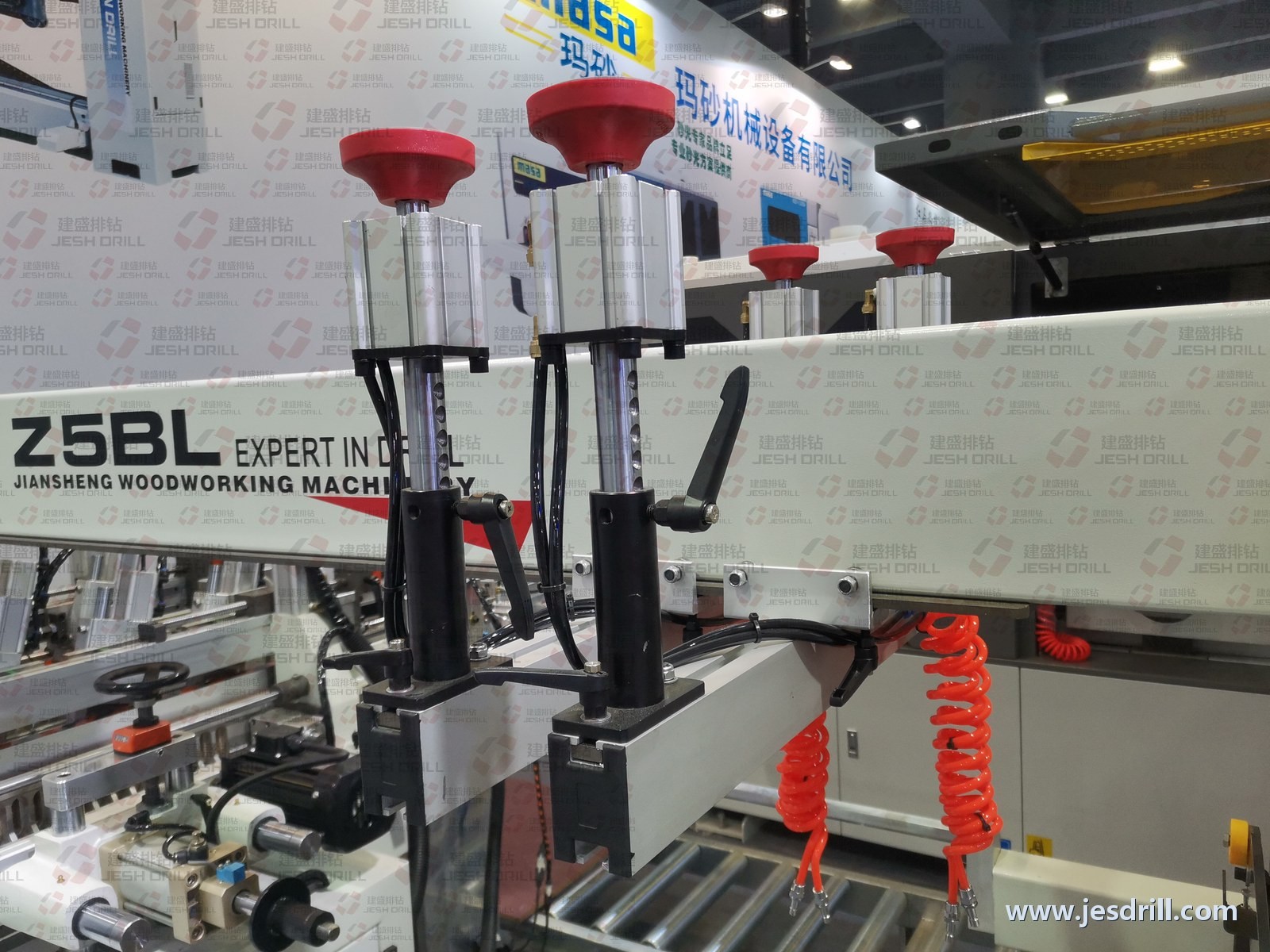
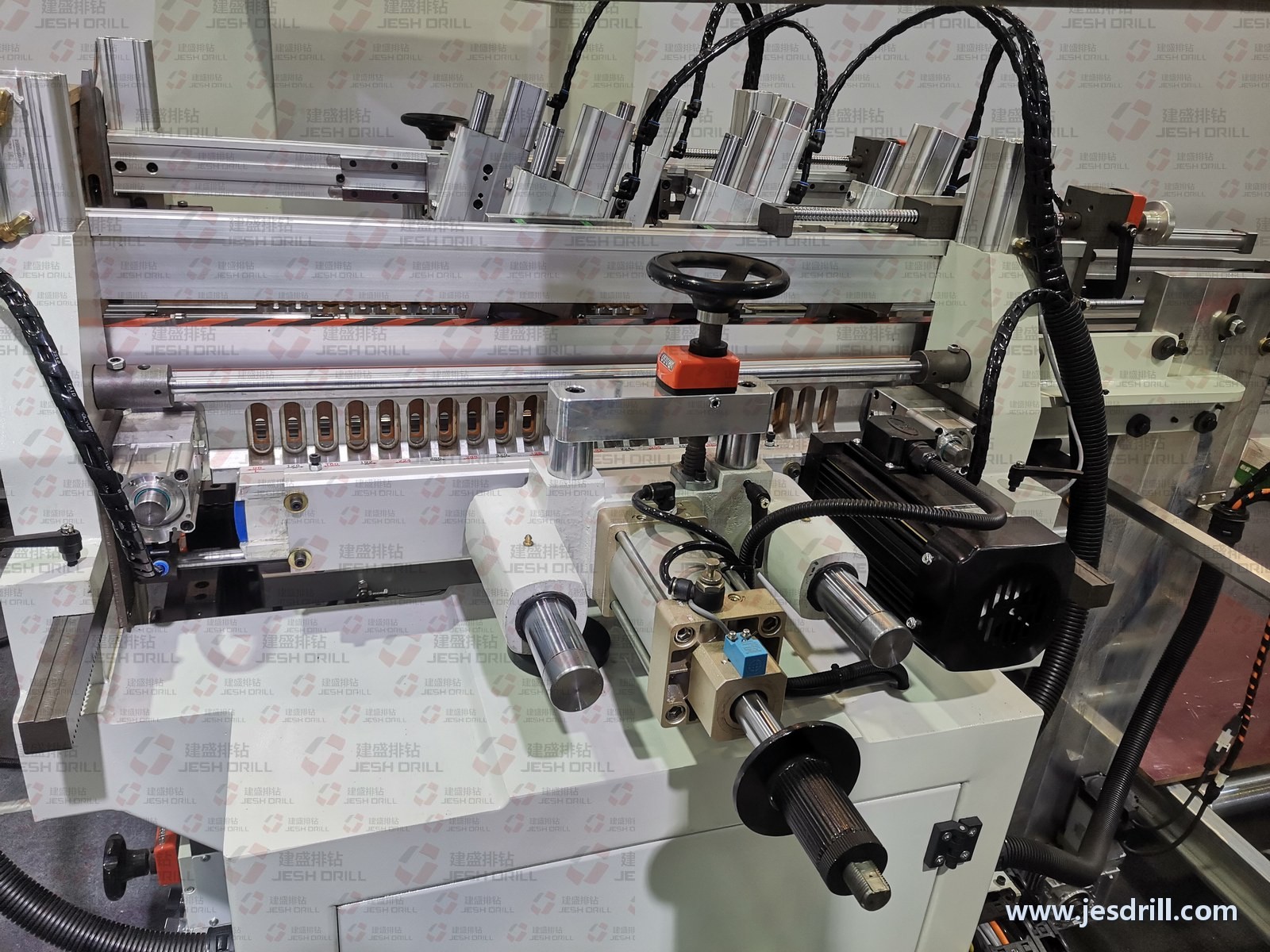
Note: photos were taken at the exhibition under limited light and angle; the factory configuration sheet and the delivered machine prevail.
Technical specifications
From this model's product document (27 items)
| Processing length | 220–1500 mm |
|---|---|
| Processing width | 32–672 mm |
| Plate thickness | 12–40 mm |
| Spindles | 110 pcs |
| Max. drilling diameter | 35 mm |
| Max. drilling depth | 40 mm |
| Spindle speed | 2840 rpm |
| Horizontal rows, left | 1 row |
| Horizontal rows, right | 1 row |
| Vertical rows, bottom | 3 rows |
| Motor per vertical row | 2 pcs |
| Stoppers | 3 sets |
| Single-panel width | 50–630 mm |
| Double-panel width | 50–220 mm |
| Triple-panel width | 50–150 mm |
| Single-panel speed | 13–16 pcs / min |
| Double-panel speed | 20–26 pcs / min |
| Triple-panel speed | 30–36 pcs / min |
| Feeding | Chain feeding |
| Rear stacker | Optional |
| Stack height above floor | 150–900 mm |
| Max. stack width | 30–1200 mm |
| Total power | 12.55 kW |
| Motor voltage | 380 V, 50 Hz, 3-phase |
| Air pressure | 0.5–0.6 MPa |
| Overall dimensions | 3400×2250×1650 mm |
| Net weight | about 1700 kg |
Note: figures come from this model's product document; the machine manual or the configuration sheet confirmed by our sales engineer prevails.
Technical documents
Manuals and sheets on request
Specification sheet
Detailed figures, installation dimensions and power requirements
Request documentsRelated products
Same range and comparable models


New arrivals
The latest machines added to the range


